
Third-party logistics (3PL) services in Brazil have become essential for companies that need reliable, scalable, and technology-driven supply chains across a vast and diverse geography. With production hubs located far from consumption centers and export gateways, Brazilian businesses increasingly rely on specialized 3PL partners to manage transportation, warehousing, inventory control, order fulfillment, and compliance as a single, coordinated operation.
Rather than juggling multiple vendors for freight, storage, and documentation, shippers outsource these functions to 3PL providers who design, operate, and continuously optimize end-to-end logistics flows.
Why 3PL Is Vital in Brazil’s Logistics Landscape
Brazil’s continental size, varied terrain, and dispersed industrial zones create natural logistics complexity. Agricultural output originates in inland states, factories cluster around major metros, and exports move through coastal ports. Coordinating these nodes efficiently requires expertise, infrastructure, and technology that many manufacturers and retailers prefer not to build in-house.
3PL providers address this by offering:
- Nationwide carrier networks and capacity planning
- Strategically located warehouses and distribution centers
- Integrated transport and inventory systems
- Skilled labor for handling and fulfillment
- Regulatory and documentation compliance
This unified model reduces fragmentation and improves reliability.
Road Transport at the Core of 3PL Operations
Because most Brazilian cargo moves by truck, road transport sits at the heart of 3PL execution. Major corridors like BR-116 connect industrial belts to consumer markets and ports, enabling direct line-haul movements.
3PLs manage:
- Factory pickups and scheduled line-hauls
- Inter-state distribution runs
- Milk-run deliveries to multiple B2B customers
- Last-mile dispatch to retailers and dealers
Control over road capacity ensures predictable transit times and service levels.
Port Integration for Importers and Exporters
For clients involved in international trade, 3PL services extend to port coordination. At the Port of Santos, providers handle container drayage, staging, customs documentation, and yard scheduling to minimize dwell time and avoid demurrage.
Synchronizing inland trucking with port operations helps shippers meet vessel cut-offs and maintain export schedules.
Warehousing and Distribution Excellence
A defining strength of 3PL providers is their warehousing footprint. Facilities are typically positioned near highways and metropolitan areas to reduce delivery lead times.
Common capabilities include:
- Warehouse Management Systems (WMS)
- Cross-docking for rapid transfers
- Temperature-controlled storage
- High-density racking for industrial goods
- Automated picking, packing, and labeling
These warehouses function as control towers for inventory and order fulfillment.
Compliance Managed by Experts
Brazil’s freight environment is regulated by the Agência Nacional de Transportes Terrestres (ANTT), which mandates electronic freight documents such as CT-e and MDF-e. 3PL providers manage this documentation and tax alignment on behalf of clients, reducing administrative overhead and preventing errors.
Digital compliance also accelerates billing, auditing, and shipment traceability.
Technology and Real-Time Visibility
Modern 3PL services rely heavily on technology integration. Providers deploy:
- Transport Management Systems (TMS) for routing and scheduling
- GPS tracking and telematics for fleet visibility
- Inventory dashboards linked to WMS
- Electronic proof of delivery (ePOD)
- Data analytics for performance optimization
Clients gain end-to-end visibility into stock, shipments, and KPIs across regions.
Industry-Focused 3PL Solutions
Different sectors require customized 3PL models:
Agriculture and Food
Bulk handling, seasonal surge capacity, and cold-chain distribution from farms to retailers.
Energy and Fuels
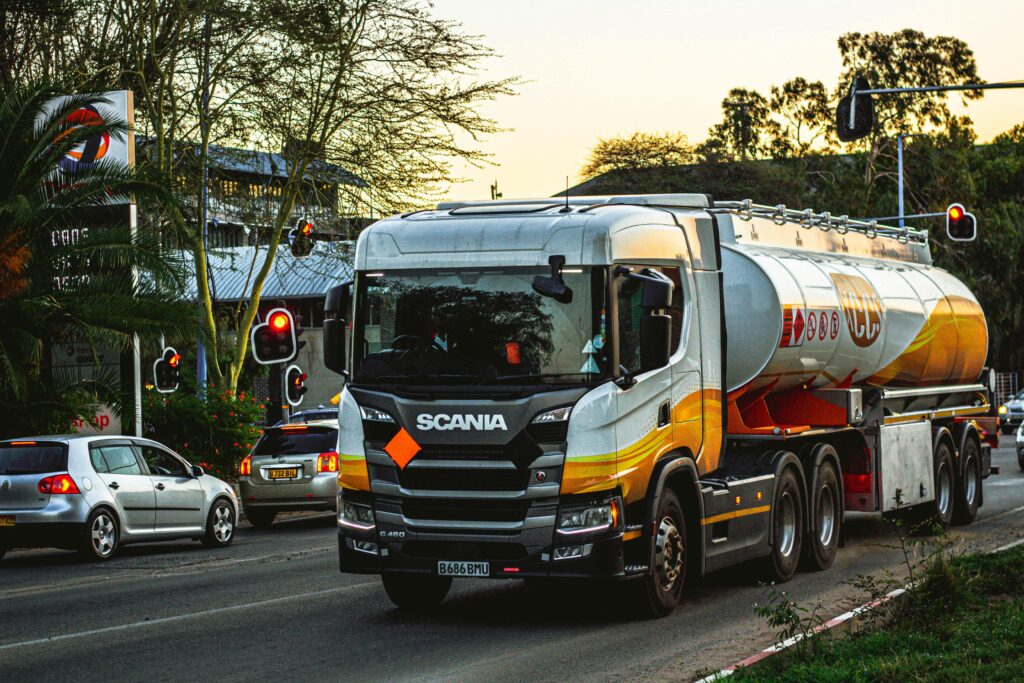
Safe tanker logistics from facilities run by Petrobras, with strict safety compliance.
Automotive and Manufacturing
Just-in-time component delivery to prevent production stoppages.
Pharmaceuticals
Secure, temperature-monitored storage and compliant distribution.
Retail and eCommerce
High-velocity order fulfillment, returns management, and urban last-mile delivery.
Dedicated Capacity and Cost Stability
Through long-term contracts and carrier partnerships, 3PLs provide assured transport capacity even during peak seasons. This shields clients from spot-market rate volatility and truck shortages during harvest cycles or holiday peaks.
Predictable capacity translates into predictable costs.
Security and Risk Mitigation
To protect valuable cargo, 3PL providers implement:
- GPS geofencing and live alerts
- Secure parking and monitored rest areas
- Integrated cargo insurance
- Route risk assessment tools
- Driver vetting and safety training
These measures enhance reliability and reduce loss incidents.
Urban Distribution and Last-Mile Expertise
Serving Brazil’s large cities requires specialized last-mile planning. 3PLs operate:
- Urban cross-dock hubs
- Night-time delivery schedules
- Smaller vehicles for city access
- Smart routing to avoid congestion
- Electric vehicles for short urban routes
This ensures timely replenishment for retail and business customers.
Multimodal Coordination for Efficiency
Although road dominates, 3PLs increasingly combine rail and coastal shipping for long-haul bulk movements, with trucks handling first and last miles. This multimodal approach reduces cost and environmental impact while retaining flexibility.
Sustainability as a Competitive Advantage
Sustainability is now a key requirement in many logistics contracts. 3PL providers respond with:
- Biodiesel and ethanol fuel blends
- Fuel-efficient fleet upgrades
- Carbon footprint reporting
- Eco-driving training programs
- Electric vehicles for city distribution
Green logistics practices strengthen long-term client partnerships.
KPI-Driven Performance Management
3PL contracts are governed by measurable performance indicators such as:
- On-time delivery rates
- Inventory accuracy
- Order fulfillment speed
- Cost per shipment
- Damage and loss ratios
Continuous monitoring and improvement ensure service excellence.
Strategic Value for Businesses
By outsourcing logistics to 3PL experts, companies can focus on manufacturing, marketing, and growth. Efficient 3PL services enable:
- Faster market reach
- Lower operational complexity
- Better customer service levels
- Stronger export competitiveness
- Scalable expansion into new regions
Logistics becomes a strategic advantage rather than a burden.
The Future of 3PL Services in Brazil
Emerging trends shaping 3PL evolution include:
- AI-driven demand forecasting and routing
- Smart toll systems and connected highways
- Increased warehouse automation and robotics
- Deeper digital integration with client ERPs
- Expansion of multimodal freight corridors
These innovations promise greater speed, transparency, and cost control.
3PL services in Brazil provide an integrated, technology-enabled solution for managing complex supply chains across vast distances. Anchored in road transport, strengthened by warehousing and port coordination, and guided by strict compliance and digital visibility, 3PLs deliver reliability, scalability, and efficiency.
As Brazilian industries expand and customer expectations rise, the role of 3PL providers will continue to grow—ensuring goods move smoothly, safely, and sustainably from origin to destination.