
Brazil’s geography plays a defining role in shaping freight patterns. Production centers are often far from consumption markets and export terminals. For example, agricultural commodities from central-west regions must travel long distances to reach ports like Port of Santos or Port of Paranaguá.
Because rail infrastructure is limited and inland waterways cannot cover all routes, highways serve as the most flexible and widely available transport option. This makes road freight the default choice for both domestic and international logistics chains.
Structure of Road Freight Operations
Road freight transport in Brazil operates through a layered system that includes:
- Long-haul trucking between states and regions
- Regional distribution networks
- Urban delivery fleets for last-mile logistics
- Consolidation and cross-docking hubs
- Freight forwarding and logistics intermediaries
Together, these components create a continuous flow of goods from origin to destination.
Major Freight Corridors
Brazil’s freight system is structured around key highway corridors that connect economic hubs. These corridors link agricultural regions, industrial zones, and ports.
For example:
- The Southeast corridor connects São Paulo with Rio de Janeiro and Minas Gerais
- Southern routes connect Paraná and Santa Catarina to export terminals
- Central-West routes move agricultural output toward coastal export gateways
These corridors form the backbone of national freight movement.
Types of Road Freight Transport
Road freight in Brazil is typically categorized into several service types:
Full Truckload (FTL)
Used for large shipments that occupy an entire vehicle. Common in manufacturing, agriculture, and export logistics.
Less Than Truckload (LTL)
Multiple smaller shipments are consolidated into a single truck, reducing costs for smaller businesses.
Dedicated Fleet Services
Companies use dedicated trucks for regular, scheduled shipments.
Express Freight
Time-sensitive deliveries for high-priority goods such as medical supplies or urgent retail stock.
Each model is chosen based on cost, urgency, and cargo volume.
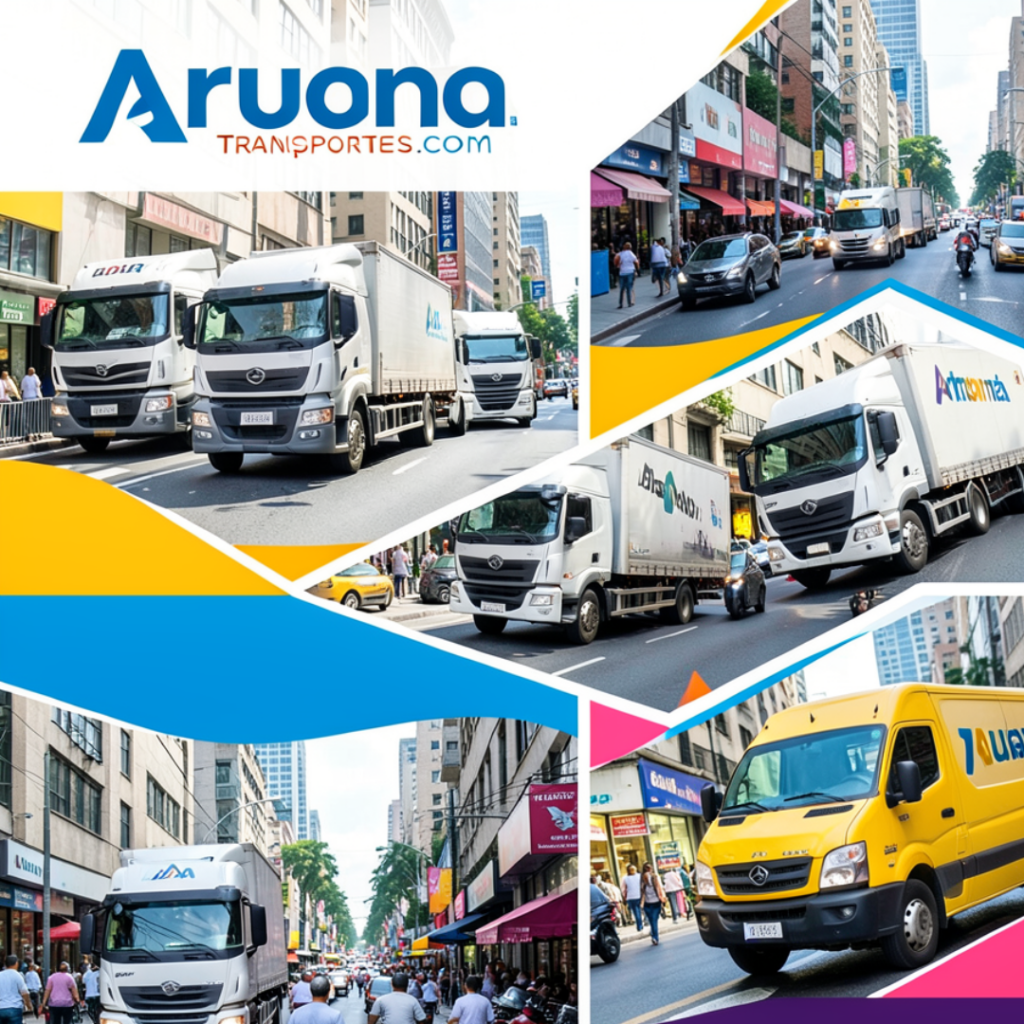
Role of Technology in Freight Transport
Technology is transforming road freight operations across Brazil. Logistics companies increasingly rely on digital tools to improve efficiency and visibility.
Key technologies include:
- GPS tracking and telematics
- Transport Management Systems (TMS)
- Route optimization software
- Electronic proof of delivery (ePOD)
- AI-based demand forecasting
These systems allow companies to monitor fleets in real time, optimize routes, and reduce operational inefficiencies.
Importance of Freight Hubs and Cross-Docking
Freight hubs are essential for consolidating and redistributing cargo. These facilities allow goods to be transferred between trucks without long-term storage.
Cross-docking improves efficiency by reducing handling time and storage costs. Goods arriving at a hub are quickly sorted and dispatched to their final destinations.
Urban hubs near cities like Belo Horizonte and Curitiba play a major role in regional distribution.
Cargo Security and Risk Management
Security is a key concern in Brazilian road freight transport. Certain routes face risks such as cargo theft, making risk management essential.
To address this, companies use:
- GPS tracking and geofencing
- Secure parking facilities
- Driver verification systems
- Real-time monitoring centers
- Insurance coverage for high-value goods
These measures help reduce losses and improve safety across the network.
Role of Ports in Road Freight Movement
Road freight plays a crucial role in connecting inland production areas with international trade routes. Goods are transported to ports like Port of Santos, which handles a significant portion of Brazil’s containerized exports.
This integration between road transport and maritime logistics ensures that Brazil remains competitive in global trade markets.
Cost Drivers in Road Freight Transport
Several factors influence freight costs in Brazil:
- Fuel prices and consumption efficiency
- Toll charges on highways
- Vehicle maintenance and depreciation
- Driver wages and availability
- Distance and route complexity
- Cargo handling and insurance requirements
Efficient route planning and load optimization are critical for controlling these costs.
Challenges in Road Freight Logistics
Despite its dominance, road freight transport in Brazil faces several challenges:
- Poor road conditions in some regions
- Traffic congestion in major metropolitan areas
- Seasonal fluctuations in agricultural freight demand
- High operating costs due to fuel and tolls
- Infrastructure bottlenecks near ports and urban centers
These challenges increase delivery times and operational complexity.
E-commerce and Freight Demand Growth
The rapid expansion of e-commerce has significantly increased demand for road freight services. Consumers expect fast and reliable delivery across both urban and rural areas.
This has led to:
- Growth in regional distribution centers
- Increased demand for last-mile delivery services
- Expansion of express freight networks
- Higher reliance on real-time tracking systems
Road freight is now central to Brazil’s digital economy.
Sustainability in Road Freight Transport
Environmental concerns are driving changes in freight operations. Companies are adopting greener practices such as:
- Route optimization to reduce fuel consumption
- Use of fuel-efficient or alternative-energy vehicles
- Load consolidation to reduce empty trips
- Emissions monitoring and reporting
These initiatives help reduce environmental impact while improving operational efficiency.
Role of Data and Analytics
Data analytics is becoming increasingly important in freight transport. Companies use historical data and real-time inputs to:
- Forecast demand
- Optimize fleet allocation
- Improve route efficiency
- Reduce delays and idle time
Predictive analytics allows better decision-making and more efficient resource use.
Future of Road Freight Transport in Brazil
The future of road freight in Brazil is expected to be more digital, automated, and integrated. Artificial intelligence will improve routing and demand forecasting, while IoT devices will enhance cargo visibility.
Integration between road, rail, and port systems will also increase efficiency and reduce dependency on road-only transport.
Road freight transport is the lifeline of Brazil’s economy. It connects agricultural regions, industrial hubs, and global trade gateways like Port of Paranaguá and Port of Santos, ensuring continuous movement of goods across vast distances.
Despite challenges such as infrastructure limitations and rising costs, road freight remains the most flexible and essential logistics solution in the country. With ongoing technological advancements and infrastructure improvements, Brazil’s road freight system is evolving into a more efficient, transparent, and resilient network that supports both domestic growth and global trade.