
Interstate trucking is the backbone of long-haul domestic freight movement in Brazil. With production zones, industrial clusters, ports, and consumer markets spread across vast distances, trucks routinely cross multiple state borders to keep supply chains moving. From grain fields in the Center-West to export terminals on the coast, and from factories in the Southeast to retailers in the Northeast, interstate trucking ensures cargo reaches the right place at the right time.
For logistics planners, manufacturers, agribusiness exporters, and distributors, understanding how interstate trucking works in Brazil is essential for reliable, cost-effective transportation.
Why Interstate Trucking Is So Important
Brazil’s size and geography make trucking the most practical inland mode for long distances. Rail coverage is limited to certain corridors, and air freight is costly for large volumes. Interstate trucking provides:
- Door-to-door flexibility across state lines
- Access to rural, industrial, and urban areas
- Scalable capacity for different shipment sizes
- Direct links between inland regions and seaports
- Faster deployment without rail scheduling constraints
This flexibility is critical for time-sensitive cargo and diverse freight types.
National Highways That Enable Interstate Freight
Long-haul trucking depends on federal highways that traverse multiple states and connect economic regions.
BR-116 Highway
One of Brazil’s longest corridors, linking southern, southeastern, and northeastern states. It supports industrial freight and consumer goods distribution over great distances.
BR-101 Highway
Running along the coast, this route connects several port cities and facilitates container movement between states.
BR-153 Highway
A key artery through central Brazil, heavily used for agricultural cargo traveling toward coastal export hubs.
BR-381 Highway
A crucial link between mining, manufacturing, and major markets in the Southeast.
These highways form the structural grid for interstate freight routes.
Strong Integration With Maritime Gateways
Interstate trucks play a vital role in feeding Brazil’s ports with export cargo and distributing imports inland after discharge.
Major gateways connected by interstate trucking include:
- Port of Santos
- Port of Paranaguá
- Port of Rio de Janeiro
Grains, meat, coffee, sugar, minerals, containers, and machinery all move across state borders by truck to reach these ports on schedule.
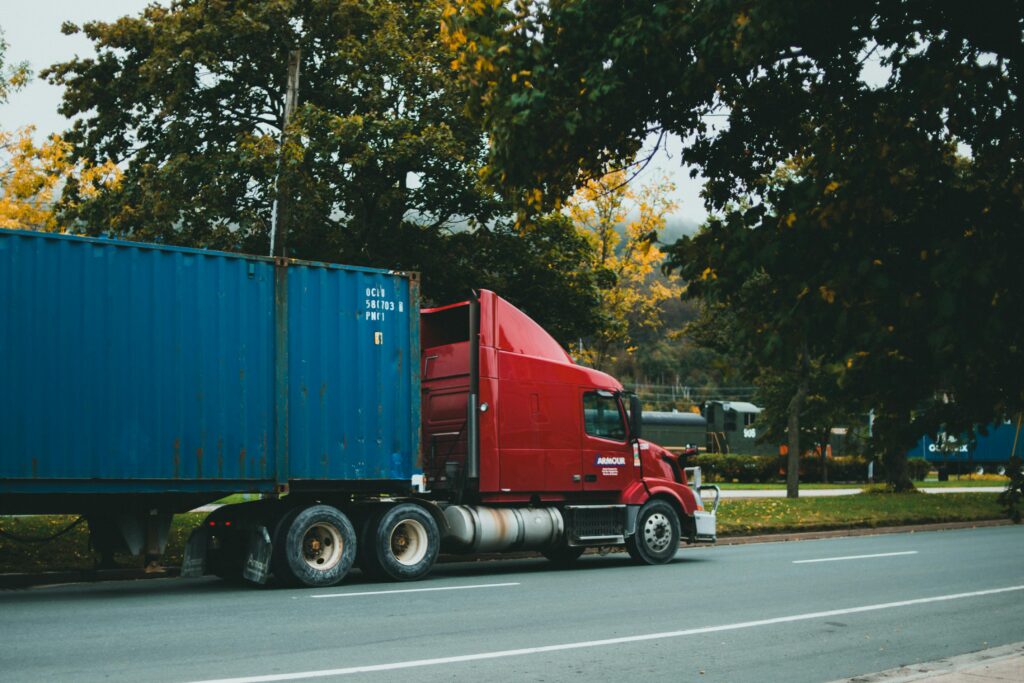
Cargo Commonly Moved Across States
Interstate trucking supports a wide spectrum of freight:
- Soybeans, corn, cotton, and sugarcane from interior farms
- Refrigerated meat and poultry from processing plants
- Iron, steel, and minerals from mining regions
- Industrial machinery and automotive parts
- Retail goods and e-commerce inventory in containers
- Fuel, chemicals, and hazardous materials in tankers
Each cargo type requires specific trailers, safety measures, and compliance documentation.
Trucking Models for Interstate Operations
Carriers typically offer two primary service models:
- Full Truckload (FTL): Dedicated vehicle for faster, direct long-haul delivery
- Less Than Truckload (LTL): Consolidated freight for cost efficiency on smaller loads
FTL is common for agricultural exports and industrial shipments, while LTL is popular for retail distribution across states.
Role of Carriers and Drivers
Brazil’s interstate trucking sector includes independent owner-operators, small fleets, and large logistics companies. Professional carriers provide:
- Contracted long-haul services for manufacturers and exporters
- Temperature-controlled reefer transport for perishables
- Timed deliveries aligned with port cut-offs and warehouse slots
- Intermodal connections with rail and maritime transport
Driver expertise is especially important on long routes that pass through varying terrain and road conditions.
Warehousing and Cross-State Distribution Hubs
Distribution centers near major highways and metropolitan regions act as interchange points for interstate freight. Goods may be:
- Cross-docked to new trucks heading to different states
- Temporarily warehoused for sorting and redistribution
- Consolidated for LTL efficiency
This hub-and-spoke model improves delivery speed and reduces empty return trips.
Technology Supporting Interstate Trucking
Digital tools have improved visibility and planning for long-distance routes:
- GPS fleet tracking for real-time monitoring
- Route optimization based on traffic and toll data
- Electronic proof of delivery (ePOD)
- Telematics for fuel efficiency and vehicle diagnostics
- Freight platforms for scheduling, billing, and communication
These systems are especially valuable for multi-day interstate journeys.
Operational Challenges
Distance and Transit Time
Cross-state routes can span thousands of kilometers, requiring careful scheduling, rest planning, and vehicle maintenance.
Road Conditions
Primary highways are generally reliable, but secondary stretches may slow transit and increase wear.
Congestion Near Urban Centers and Ports
Interstate trucks often face delays when entering major cities or approaching port terminals.
Fuel, Tolls, and Costs
Long distances mean higher diesel consumption and toll expenses, affecting freight pricing.
Security Risks
Certain corridors require enhanced security protocols due to cargo theft risks.
Experienced carriers mitigate these challenges through planning, insurance, and technology.
Sustainability in Long-Haul Trucking
Environmental considerations are shaping interstate trucking practices:
- Adoption of fuel-efficient engines
- Route planning to reduce emissions
- Trials with alternative fuels
- Paperless documentation and digital workflows
These steps reduce the carbon footprint of long-distance freight.
Benefits for Businesses
Interstate trucking offers businesses:
- Reliable long-distance, door-to-door delivery
- Flexible shipment volumes and schedules
- Direct links between production areas and markets
- Seamless coordination with ports and warehouses
- Faster domestic distribution across regions
Exporters depend on interstate trucks to meet vessel deadlines, while importers rely on them for inland distribution.
The Future of Interstate Trucking in Brazil
Ongoing investments in highway concessions, smart tolling, and digital freight networks will enhance long-haul efficiency. Integration with rail corridors and port logistics will create stronger multimodal systems, reducing delays and improving cost control.
As Brazil’s economy, agribusiness output, and e-commerce demand grow, interstate trucking will remain a central pillar of domestic logistics.
Interstate trucking is the connective force that links Brazil’s states into a unified economic network. By moving goods across vast distances—between farms, factories, ports, warehouses, and cities—trucks sustain the country’s trade and distribution systems every day.
For companies operating in Brazil, partnering with capable interstate carriers and understanding major highway corridors is essential to achieving timely deliveries, cost efficiency, and resilient supply chains.