
Road freight is the dominant mode of cargo movement across Brazil. With vast agricultural regions, dispersed industrial hubs, and long distances between production centers and ports, trucking forms the critical link in the country’s supply chain. From farm pickups in the interior to container drayage at coastal terminals, road freight in Brazil keeps goods flowing for domestic distribution and international export.
A well-developed highway network, a large fleet of carriers, and flexible routing make road transport the most practical option for time-sensitive and door-to-door deliveries across the country.
Why Road Freight Dominates in Brazil
Brazil’s geography and infrastructure have shaped a logistics system where trucks do most of the work:
- Long distances between inland producers and coastal ports
- Limited rail coverage for containerized and general cargo
- Need for flexible, last-mile delivery to warehouses and retailers
- Fast response for urgent shipments and regional distribution
As a result, a significant share of cargo—containers, palletized goods, bulk bags, machinery, and consumer products—moves by road at some stage of the journey.
Key Highway Corridors Supporting Freight
Several national highways form the arteries of Brazil’s trucking network, connecting industrial zones to ports and metropolitan markets.
- BR-116: One of the longest highways in the country, linking southern states to the southeast and northeast, widely used for container and general cargo.
- BR-101: Runs along the coast, connecting major port cities and enabling fast regional distribution.
- BR-381: Vital for industrial freight between Minas Gerais and São Paulo.
- BR-163: A crucial agricultural route moving soybeans and corn from the Center-West to ports.
These corridors handle heavy truck traffic daily, supporting both domestic trade and export logistics.
Major Freight Origins and Destinations
Road freight activity is concentrated between production centers, distribution hubs, and seaports:
- Port of Santos for container exports and imports
- Port of Paranaguá for agricultural and container cargo
- Port of Rio de Janeiro for industrial and energy shipments
- Industrial zones in São Paulo, Minas Gerais, Paraná, and Santa Catarina
- Agricultural regions in Mato Grosso, Goiás, and Mato Grosso do Sul
Trucks connect these points with flexible routing based on cargo type and delivery urgency.
Types of Road Freight Services in Brazil
Road freight providers offer a wide range of services to suit different cargo profiles:
- Full Truck Load (FTL) for large, dedicated shipments
- Less Than Truck Load (LTL) for smaller consignments
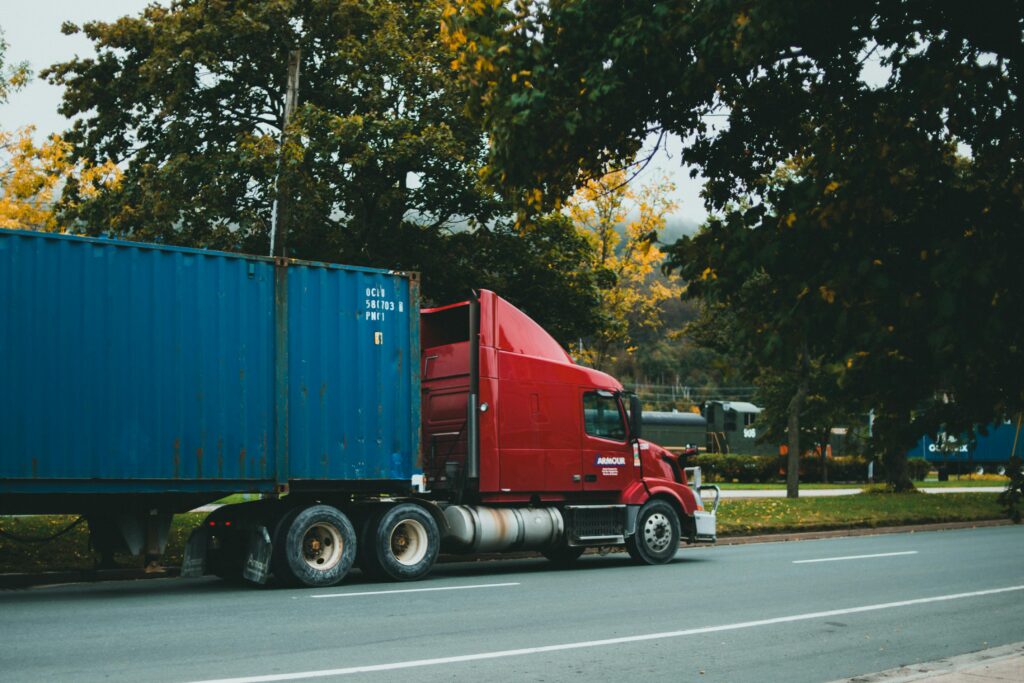
- Container drayage between ports and inland depots
- Refrigerated trucking for perishables
- Bulk transport using tipper and silo trucks
- Flatbed and lowboy trailers for machinery and project cargo
- Hazardous goods transport with certified vehicles
This versatility allows road freight to support nearly every industry.
Industries Dependent on Trucking
Road freight is essential for:
- Agriculture and food processing
- Automotive manufacturing
- Retail and eCommerce distribution
- Construction and heavy equipment
- Chemicals and petrochemicals
- Pharmaceuticals and healthcare supplies
For many of these sectors, trucking is the only viable door-to-door option.
Container Drayage: Linking Ports to Inland Brazil
A critical role of road freight is moving containers to and from ports. After arriving at terminals, containers are loaded onto trucks for delivery to inland warehouses or factories. Similarly, export containers are trucked from inland origins to port gates before vessel cut-off times.
Efficient drayage planning reduces demurrage charges, port congestion, and missed sailings.
Technology in Brazilian Road Freight
Modern trucking operations in Brazil increasingly rely on technology:
- GPS fleet tracking and route optimization
- Electronic proof of delivery (ePOD)
- Digital freight marketplaces connecting shippers and carriers
- Telematics for fuel efficiency and safety monitoring
- Automated scheduling with port and warehouse systems
These tools improve visibility, reliability, and cost control.
Challenges in Road Freight Operations
Despite its dominance, road freight in Brazil faces challenges:
- Traffic congestion near major cities and ports
- Road conditions in remote agricultural areas
- Fuel price fluctuations
- Security concerns and cargo theft in certain corridors
- Regulatory checks and weigh stations
Experienced carriers mitigate these risks through route planning, insurance, and secure convoy practices where necessary.
Compliance and Safety Regulations
Brazil enforces strict road transport regulations:
- Driver working hour limits
- Vehicle weight restrictions
- Hazardous cargo certifications
- Electronic transport documentation (CT-e, MDF-e)
- Toll and checkpoint compliance
Professional freight companies ensure adherence to avoid fines and delays.
Intermodal Coordination with Rail and Sea
While trucks dominate, road freight often works alongside rail and sea:
- Trucks carry containers to rail terminals for long-haul grain transport
- Road links connect factories to ports for ocean exports
- Intermodal hubs allow cargo transfers to optimize cost and speed
This coordination creates a more resilient and efficient logistics chain.
Sustainability in Trucking
Environmental considerations are shaping the future of road freight:
- Adoption of fuel-efficient and lower-emission vehicles
- Route optimization to reduce fuel consumption
- Use of biodiesel blends common in Brazil
- Fleet modernization and maintenance programs
Sustainability is becoming a key factor for shippers selecting transport partners.
Choosing the Right Road Freight Partner
Businesses should evaluate:
- Fleet size and vehicle types
- Experience with specific cargo (reefer, hazardous, oversized)
- Technology and tracking capabilities
- Knowledge of port and highway operations
- Insurance and safety standards
- Nationwide coverage and reliability
A capable trucking partner ensures on-time deliveries and reduced logistics stress.
Future of Road Freight in Brazil
Government and private investments are improving highways, rest stops, and logistics corridors. Digital freight platforms are increasing transparency and efficiency in carrier selection. As eCommerce and exports grow, demand for reliable trucking services will continue to rise.
Road freight will remain the backbone of Brazil’s domestic and export logistics for decades to come.
Road freight in Brazil is the essential link connecting inland production, urban markets, and international ports. Supported by extensive highway corridors, diverse trucking services, and advancing technology, it enables efficient cargo movement across vast distances.
For businesses operating in Brazil, leveraging professional road freight solutions means faster deliveries, better supply chain coordination, and dependable access to both domestic and global markets.